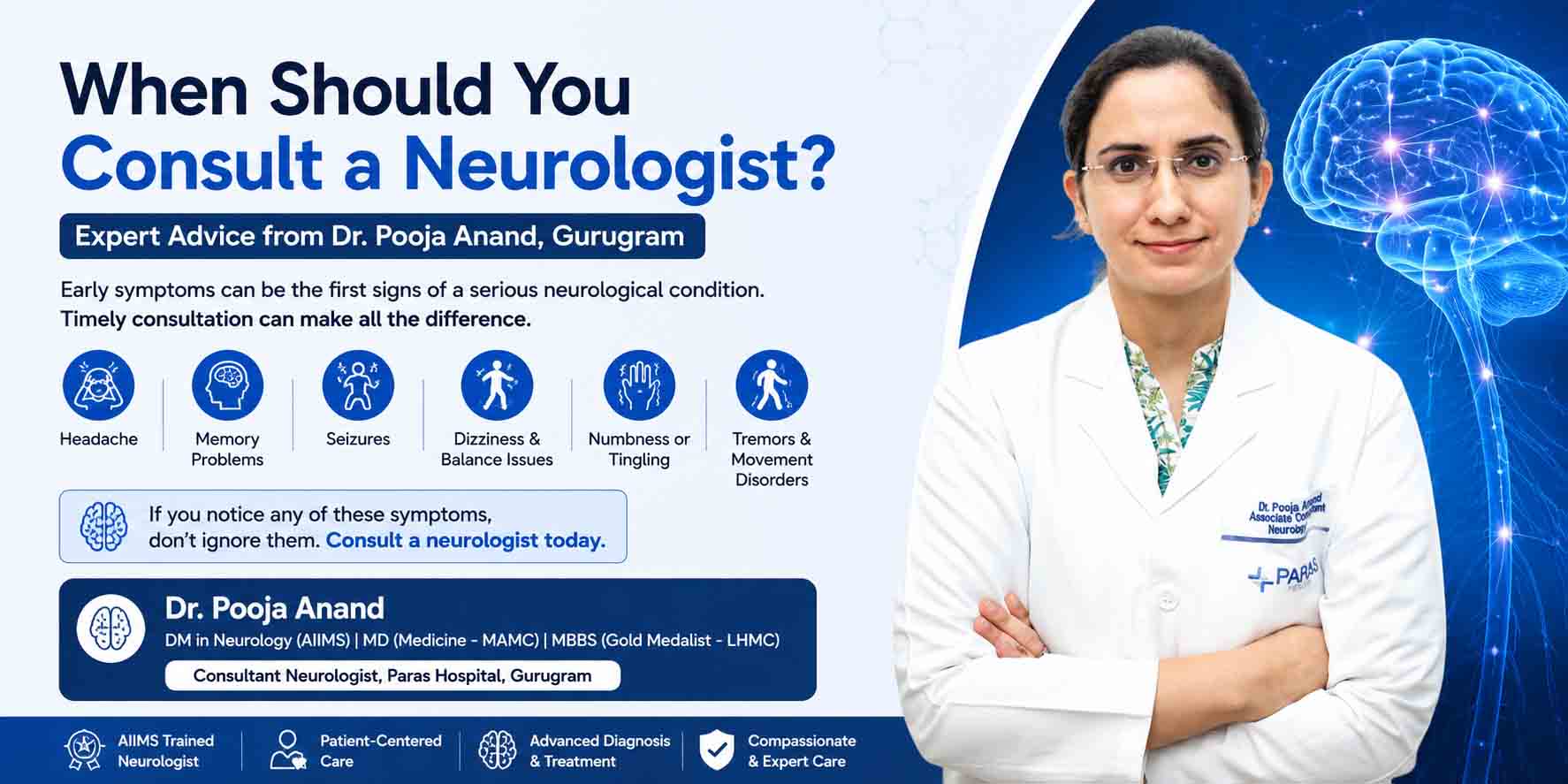
When Should You Consult a Neurologist? Expert Advice from Dr. Pooja Anand, Gurugram
The brain, spinal cord, and nerves form the body's nervous system, controlling everything from movement and sensation to memory and emotions. When something affects this complex system, it can significantly impact your quality of life. Recognizing the warning signs early and consulting a neurologist can help prevent complications and improve treatment outcomes.
Dr. Pooja Anand, a renowned neurologist at Paras Hospital, Gurugram, shares expert insights on when you should seek neurological consultation and why timely diagnosis is essential for maintaining brain health.
What Does a Neurologist Do?
A neurologist is a medical specialist who diagnoses and treats disorders affecting the brain, spinal cord, nerves, and muscles. Neurologists manage a wide range of conditions, including stroke, epilepsy, Parkinson's disease, migraines, neuropathy, multiple sclerosis, movement disorders, and memory-related problems.
With advanced training from AIIMS and extensive experience in neurological care, Dr. Pooja Anand provides comprehensive diagnosis and treatment for complex neurological conditions.
Signs You Should Consult a Neurologist
1. Frequent or Severe Headaches
While occasional headaches are common, recurring headaches, migraines, or headaches that suddenly become severe may indicate an underlying neurological condition. If your headaches interfere with daily activities or are accompanied by vision changes, dizziness, or weakness, medical evaluation is recommended.
2. Sudden Weakness or Numbness
Sudden weakness, numbness, or tingling in the face, arm, or leg may be an early sign of a stroke or nerve disorder. Immediate medical attention is critical, as early treatment can significantly reduce complications.
3. Seizures or Epileptic Episodes
Seizures can occur at any age and may present as loss of consciousness, involuntary movements, staring spells, or unusual sensations. A neurologist can determine the cause and recommend appropriate treatment.
4. Memory Problems and Cognitive Decline
Persistent forgetfulness, confusion, difficulty concentrating, or changes in behavior should not be ignored. Early assessment can help identify conditions such as dementia, Alzheimer's disease, or other neurological disorders.
5. Dizziness and Balance Problems
Frequent dizziness, vertigo, difficulty walking, or loss of balance may be related to neurological conditions affecting the brain, inner ear, or nervous system.
6. Tremors and Movement Disorders
Uncontrolled shaking, tremors, stiffness, or slowed movements may be symptoms of Parkinson's disease or other movement disorders. Early diagnosis often leads to better symptom management.
7. Chronic Nerve Pain
Burning, tingling, numbness, or shooting pain in the hands and feet may indicate peripheral neuropathy or nerve damage. Neurological evaluation helps identify the cause and guide treatment.
8. Sleep Disorders
Neurological conditions can sometimes affect sleep patterns. Excessive daytime sleepiness, restless legs syndrome, or unexplained sleep disturbances may require specialist evaluation.
9. Muscle Weakness
Progressive muscle weakness, difficulty lifting objects, or problems with coordination may indicate nerve or muscle disorders that require prompt diagnosis.
10. Stroke Symptoms
Signs such as sudden facial drooping, difficulty speaking, vision loss, severe headache, or weakness on one side of the body require emergency medical attention. Rapid treatment can be life-saving and reduce long-term disability.
Importance of Early Neurological Evaluation
Many neurological disorders can worsen if left untreated. Early diagnosis allows for timely intervention, improved symptom control, and better long-term outcomes. Modern diagnostic tools and personalized treatment plans have significantly enhanced the management of neurological conditions.
Why Choose Dr. Pooja Anand in Gurugram?
Dr. Pooja Anand is a highly qualified neurologist with a DM in Neurology from AIIMS, New Delhi. She specializes in:
- Stroke Treatment
- Epilepsy Management
- Parkinson's Disease
- Movement Disorders
- Nerve and Muscle Disorders
- Neurological Diagnosis
- Headache and Migraine Treatment
Her patient-centered approach, combined with advanced neurological expertise, ensures comprehensive and compassionate care for patients of all ages.
Conclusion
Neurological symptoms should never be ignored, especially when they affect daily life or appear suddenly. Early consultation with a qualified neurologist can help identify underlying conditions and improve treatment outcomes. If you experience persistent headaches, seizures, memory issues, dizziness, weakness, or other neurological concerns, seeking expert care is an important step toward better health.